
Diesel generation is the silent tax on business across much of Africa. It works, it is available everywhere, and it quietly consumes the margin of every operation that depends on it. A large farm in Warri, Nigeria shows exactly how large that tax can be – and how decisively solar plus storage removes it.
The Starting Point: Six Gensets and a Fuel Bill
The farm’s load is substantial and continuous: about 2.2MW during the day and 1.5MW through the night, covering irrigation, processing, cold storage and site facilities. With no reliable grid connection, that load ran on six 1MW diesel gensets, rotated to share running hours and provide redundancy.
The fuel bill tells the story. Depending on diesel prices and loading, the farm was spending between $81,000 and $122,000 every single month on fuel – before counting oil changes, filters, overhauls, spare engines and the labour of keeping six machines fed and serviced around the clock. That is a million dollars a year flowing out of the business and into a fuel truck.
And the money was not even buying good power. Gensets at partial load run inefficiently, voltage and frequency wander as machines cycle, and every refuelling trip is a logistical operation of its own.
The Replacement: 10MW of Solar, 20MWh of Storage
The engineered solution replaced the genset fleet with a 10MW ground-mounted solar array and a 20MWh battery energy storage system. Warri enjoys around six hours of strong sun per day, which is the number that makes the arithmetic work: the array harvests enough energy in those six hours to cover the full 24-hour load, with the batteries carrying the site from late afternoon through the night and into the next morning.
During daylight, solar feeds the farm’s 2.2MW daytime load directly and charges the storage system with the surplus. At night the batteries discharge into the 1.5MW load – comfortably inside their capacity, with margin kept in reserve for cloudy spells. The diesel units remain on site as emergency backup, but in normal operation they simply do not run.
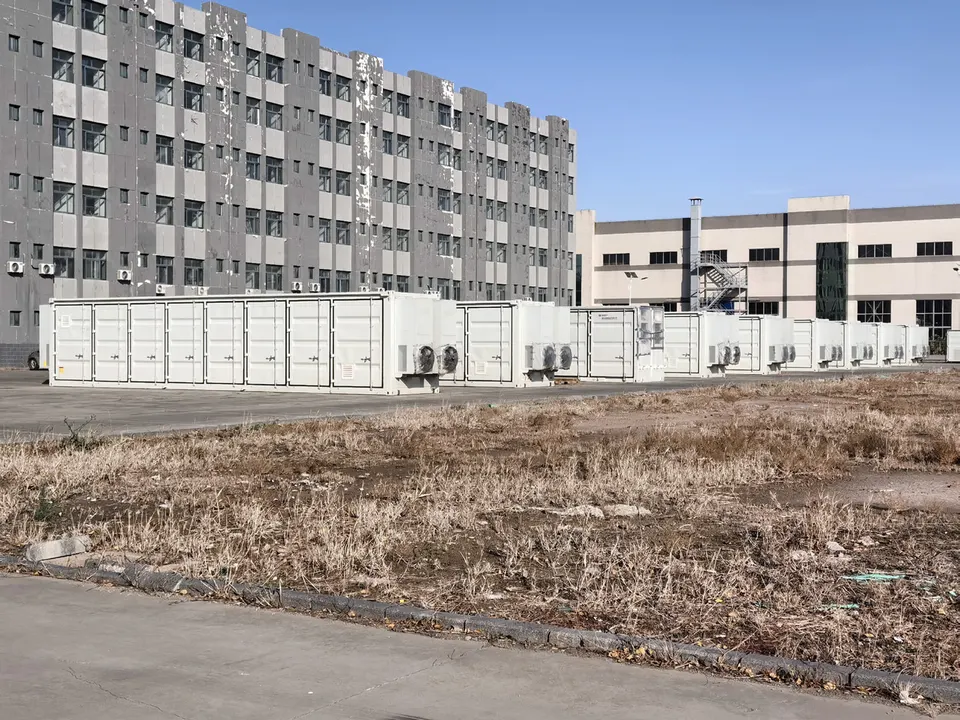
Containerized battery systems arrived pre-assembled and factory-tested, so installation was a matter of positioning, connecting and commissioning rather than building a power plant from parts. Every battery module uses CATL/EVE lithium iron phosphate cells rated for 6,000+ cycles – the chemistry that makes daily deep cycling a 15-year asset instead of a consumable.
The Monthly Arithmetic
The comparison could hardly be more direct. Before: $81,000-122,000 per month in diesel fuel, plus maintenance, plus downtime risk. After: fuel cost of effectively zero, because sunlight is not invoiced. The farm’s operations team now manages a monitoring dashboard instead of a fuel logistics chain.
Projected payback for the entire system – array, storage, power conversion and installation – is under three years. After that point, the farm’s power is essentially free for the remaining 25-plus years of the system’s design life. Few capital investments anywhere in agriculture offer a three-year payback followed by two decades of zero operating cost.
There is a second, quieter benefit: power quality. The battery inverters hold voltage and frequency rock-steady, cold storage temperatures stopped fluctuating with genset behaviour, and spoilage losses fell with them. Reliable electricity is not only cheaper – it protects everything else the farm invested in.
Why This Matters Beyond One Farm
The Warri project is large, but the arithmetic scales down as well as up. Any operation running diesel prime power – a factory, a mine, an island resort, a cold chain depot – is paying the same tax in proportion to its load. The rule of thumb from this project: if your monthly fuel bill would cover a payment on a solar-plus-storage system sized for your site, the system wins, usually by a wide margin.
Two factors have tipped the balance in the last few years. Solar modules and lithium batteries have fallen in price to the point where the capital cost per kWh delivered is a fraction of diesel’s, and storage technology has matured to the point where 24/7 renewable power is an engineering routine rather than an experiment.
What a Diesel-to-Solar Assessment Looks Like
Every conversion starts with the load profile: hourly consumption day and night, peak demands, and any critical loads that cannot blink. From that we size the array around local peak sun hours, set storage capacity for the night load plus reserve, and configure the hybrid inverters for automatic genset fallback – the generators stay as insurance, not as the plan.
If you know your monthly diesel spend, you already hold the most important number. Send us that figure together with your load pattern and location, and our engineers will return a system configuration with projected savings and payback – the same analysis that turned a six-genset farm in Warri into a solar-powered operation with a million-dollar annual saving.