
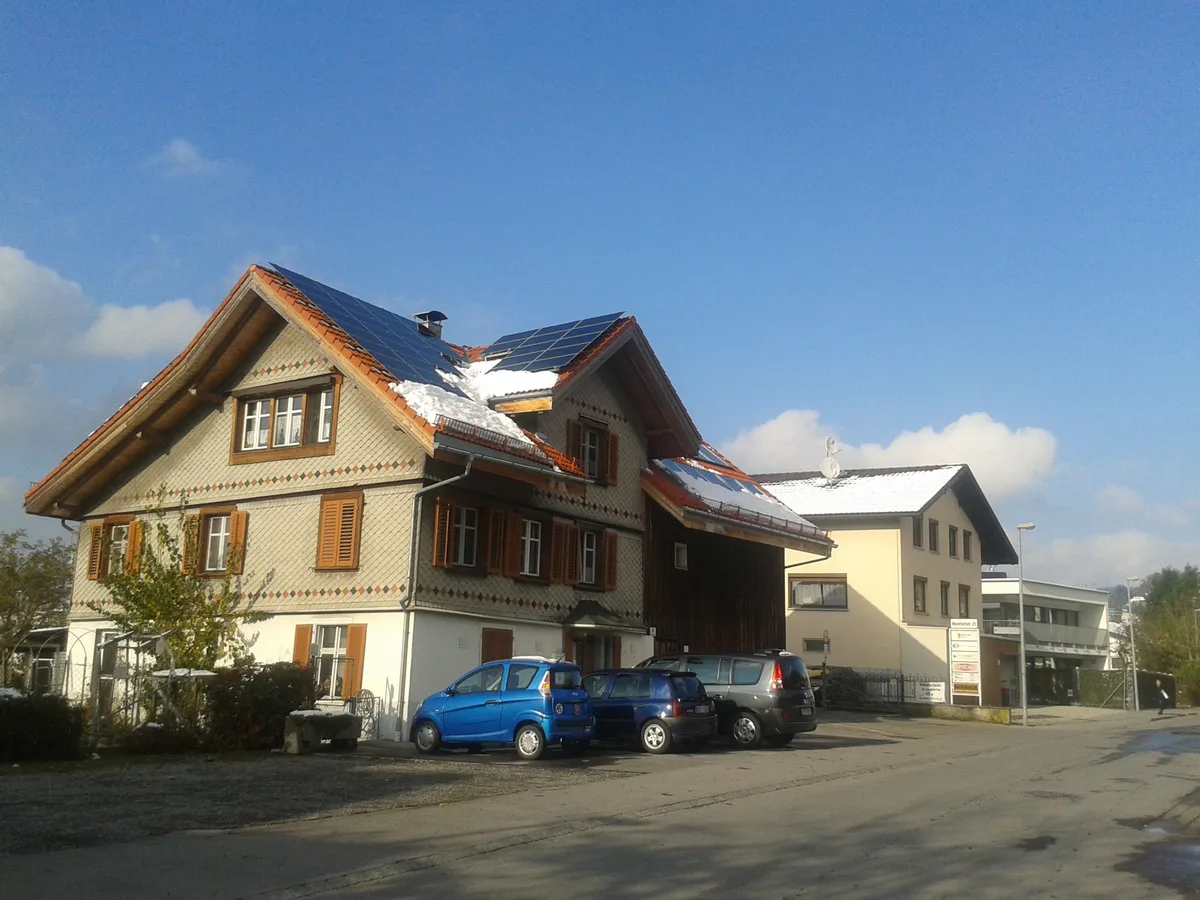
Project Background
A family home in Slovenia installed a 10 kW hybrid system in 2024 to maximize self-consumption under the country’s net-billing rules, where exported power earns far less than avoided purchase. The project shows how storage reshapes residential solar economics across Central Europe.
The Challenge
Without storage, much of the midday generation would flow to the grid at low export prices while the family bought evening power back at full price. The alpine-style architecture also demanded attractive modules, and the continental climate punishes panels with hot summers and cold winters.
Our Solution
We installed all-black N-type modules that suit the home’s architecture, paired with a wall-mounted hybrid inverter and LiFePO4 battery that fit neatly in the garage. Solar generation covers daytime demand and charges the battery for evening and morning use; the panels’ -0.30%/K temperature coefficient preserves output through summer heat waves.
Results & Benefits
- Self-consumption exceeds 80% – the household buys little grid energy outside the darkest winter weeks.
- Net-billing optimized – stored solar displaces full-price evening purchases instead of exporting cheap.
- Architecture-friendly design – uniform all-black modules and a tidy garage installation.
- Strong winter behaviour – low temperature coefficient and weak-light response stretch the season.